Application database
relational storage for any MySQL-compatible app
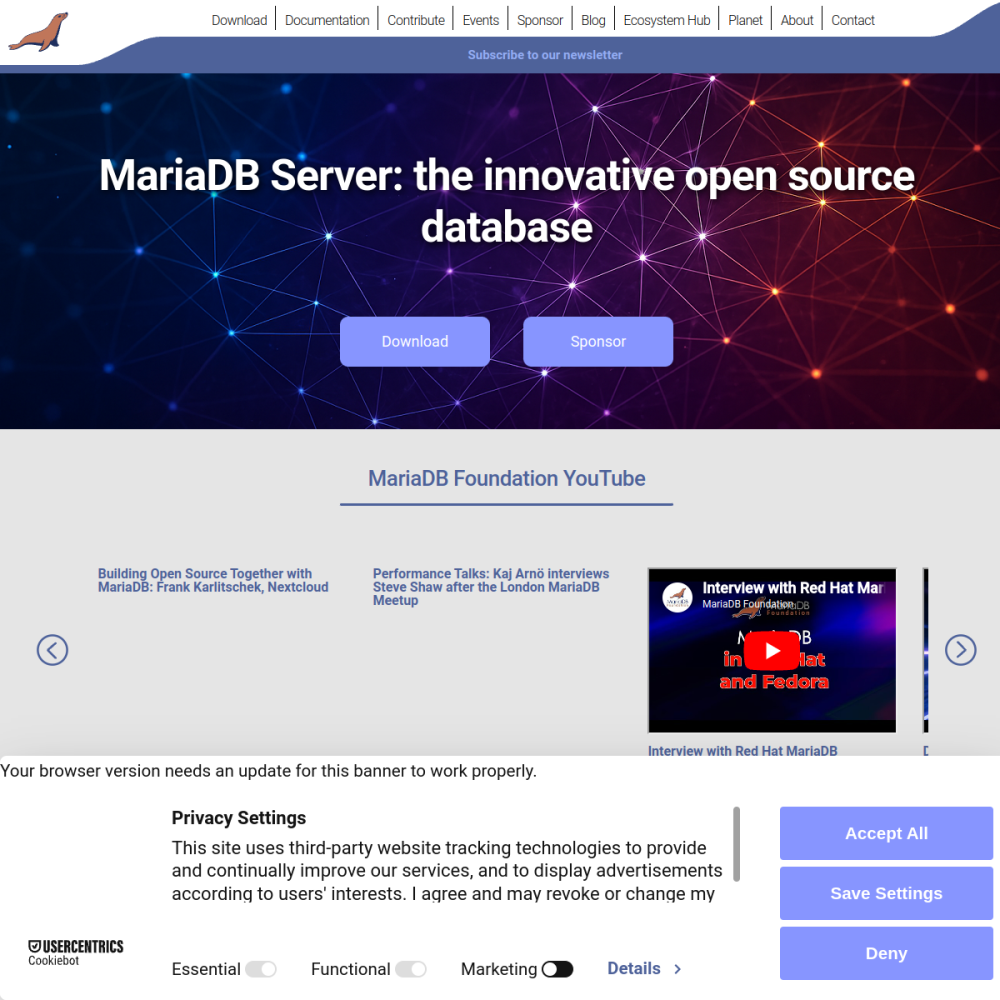
// official site: mariadb.org ↗
MariaDB is the community-developed fork of MySQL — drop-in compatible, GPL-2 licensed, with feature additions beyond Oracle MySQL. Maintained by the original MySQL founders, used as the default MySQL replacement in Debian, Red Hat, Arch Linux, and most distros.
MariaDB is the community-developed fork of MySQL — drop-in compatible, GPL-2 licensed, with feature additions beyond Oracle MySQL. Maintained by the original MySQL founders, used as the default MySQL replacement in Debian, Red Hat, Arch Linux, and most distros.
For teams who want MySQL-compatible storage without Oracle's commercial license concerns.
Concrete scenarios where teams pick MariaDB over the SaaS alternative.
relational storage for any MySQL-compatible app
primary DB for popular CMS
Galera Cluster built-in for synchronous replication
ColumnStore engine for analytics
InnoDB + Aria + Xtradb storage engines
If your team profile matches one of these, MariaDB is a strong fit out of the box.
using MySQL-compatible apps (WordPress, Magento, etc.)
wanting MySQL features without Oracle commercial ties
running CMS / e-commerce platforms
offering shared MariaDB databases
moving off Oracle MySQL to community-driven fork
When evaluating self-hosted options for this category, here are the dimensions on which MariaDB consistently lands above the alternatives.
The stack you'll plug MariaDB into — services, protocols, and adjacent apps in the BluixApps catalog.
mariadb:11.4 (LTS branch)/var/lib/mysqlOperational guidance from running this in production — what to lock down, what surprises people.