HomeCatalog⚙️ DevOps & InfrastructurePowerDNS Auth
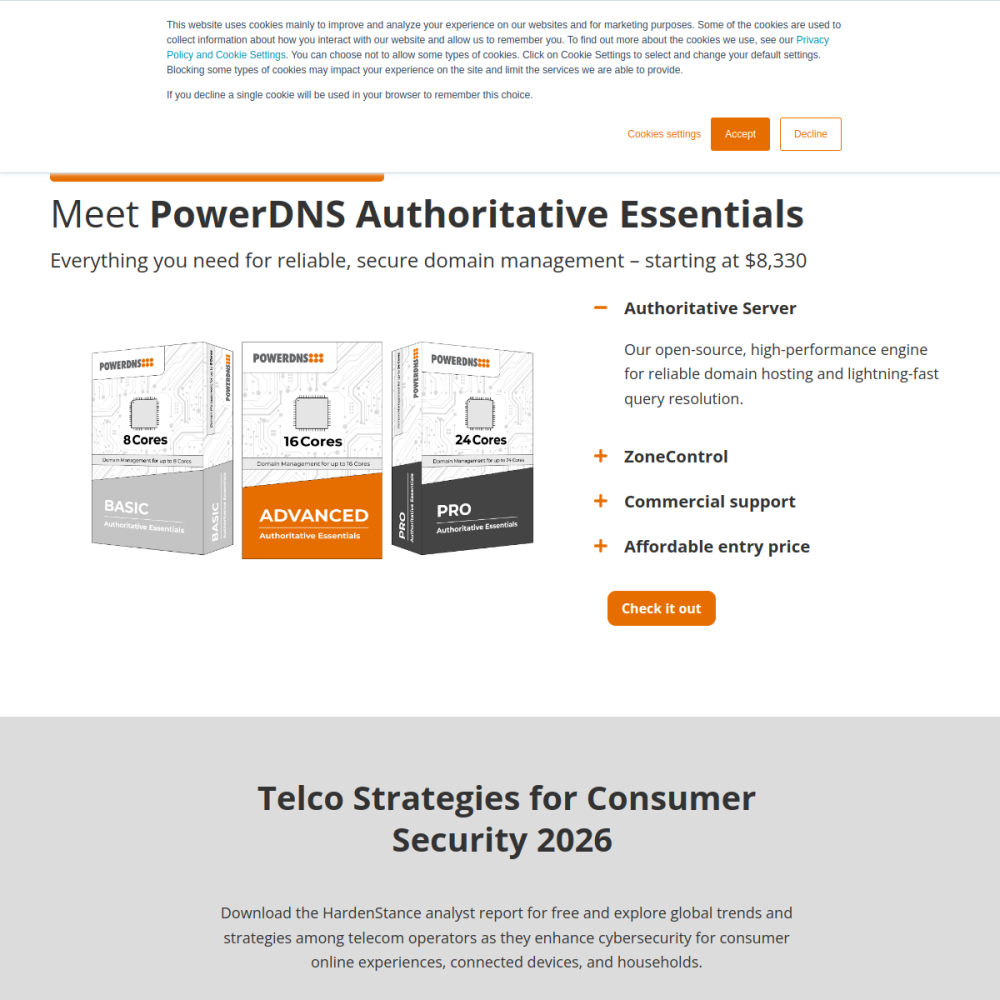
Screenshot of PowerDNS Auth website

// screenshot of powerdns.com ↗

DEVOPS & INFRASTRUCTURE · PRO TIER

PowerDNS Authpro

PowerDNS is an authoritative DNS server with first-class API for programmatic zone management. Used as the canonical DNS server for hosting providers, ISPs, and platforms that need to manage thousands of zones via API. Pair with PowerDNS-Admin (the included web UI) for a complete DNS management stack.

⚙️ DevOps & Infrastructure Min 256 MB RAM Port 8081 (http) Tier pro
// What it is

A closer look.

PowerDNS is an authoritative DNS server with first-class API for programmatic zone management. Used as the canonical DNS server for hosting providers, ISPs, and platforms that need to manage thousands of zones via API. Pair with PowerDNS-Admin (the included web UI) for a complete DNS management stack.

For teams running their own DNS infrastructure — typically registrars, hosting providers, multi-tenant SaaS — PowerDNS is the API-first choice.

// Use cases

What it's for.

Concrete scenarios where teams pick PowerDNS Auth over the SaaS alternative.

Authoritative DNS

primary nameserver for owned domains
Multi-tenant DNS

give customers their own DNS zones

API-driven DNS

programmatic zone management for automation

Geographic DNS

geo-aware responses (Enterprise)

DNSSEC signing

automated DNSSEC for hosted zones

// Who it's for

Built for these teams.

If your team profile matches one of these, PowerDNS Auth is a strong fit out of the box.

Profile A

Hosting providers

offering DNS services to customers

Profile B

ISPs / telecoms

running authoritative DNS infrastructure

Profile C

Domain registrars

managing zone files at scale

Profile D

Platform engineering

building automated DNS workflows

Profile E

Self-hosters

running their own nameservers (vs cloud DNS)

// Differentiators

Why teams pick PowerDNS Auth.

When evaluating self-hosted options for this category, here are the dimensions on which PowerDNS Auth consistently lands above the alternatives.

  • GPL-2.0 — fully open
  • API-first — REST API for everything; CLI as a thin wrapper
  • Multi-backend — Postgres, MySQL, LDAP, BIND zone files, custom
  • DNSSEC native — automated key management, signing on write
  • High performance — millions of queries per second on modest hardware
  • PowerDNS-Admin UI — web interface for non-API users
// Integrations

Connects to.

The stack you'll plug PowerDNS Auth into — services, protocols, and adjacent apps in the BluixApps catalog.

Backends
Postgres, MySQL, LDAP, SQLite, BIND zone files, LMDB, custom
API
REST endpoints for zone + record management
DNS protocols
UDP / TCP / DNS-over-TLS / DNS-over-HTTPS
Provisioning
Terraform PowerDNS provider, Ansible modules
Monitoring
Prometheus exporter, Carbon metrics
Auth backends
LDAP, OAuth via PowerDNS-Admin
DNSSEC
automated key rollover, NSEC3 / NSEC
// Adoption & deployment

Notable users & community

  • 4k+ GitHub stars
  • Used by major hosting providers (OVH, Linode historically, Hetzner)
  • Backed by PowerDNS.COM (NL) — commercial enterprise support
  • Long-running OSS project (>20 years)
  • Standard DNS server in registrar / hosting industries

What we ship

  • Docker compose: PowerDNS Authoritative + PowerDNS-Admin + Postgres
  • Pinned powerdns/pdns-auth-49:latest (release-tagged) — series 4.9
  • HTTPS via Let's Encrypt for admin UI
  • Postgres backend for zone storage
  • API token auto-generated; surfaced in install report
  • DNSSEC enabled by default for new zones
  • Backup hook covers Postgres (zones + DNSSEC keys)
// Tips & operations

Run it properly.

Operational guidance from running this in production — what to do before you scale, what to lock down, what surprises people.

// PERFORMANCE
Use Postgres backend for production
scales to millions of zones
// SECURITY
API tokens per tenant
never share API keys; tenant isolation matters
// OPERATIONS
DNSSEC discipline
automated key rollover or manual rolling; both work but require care
// RELIABILITY
Bind PowerDNS to 0.0.0.0
by default listens on localhost; production needs external bind
// DEPLOYMENT
PowerDNS-Admin separately
UI is its own service; don't bundle authentication
// SCALING
Monitor query rate
DDoS mitigation via rate limiting + UPF (Unique Pseudo Function)
256
// min ram (MB)
2
// min disk (GB)
8081
// access port
http
// protocol
pro
// bluixapps tier
53:53 · powerdns/pdns-auth-49:4.9.14
// docker image

Project resources

Official sitepowerdns.com ↗
// Alternatives in DevOps & Infrastructure

Compare with