Self-hosted Git
code hosting for internal / private projects
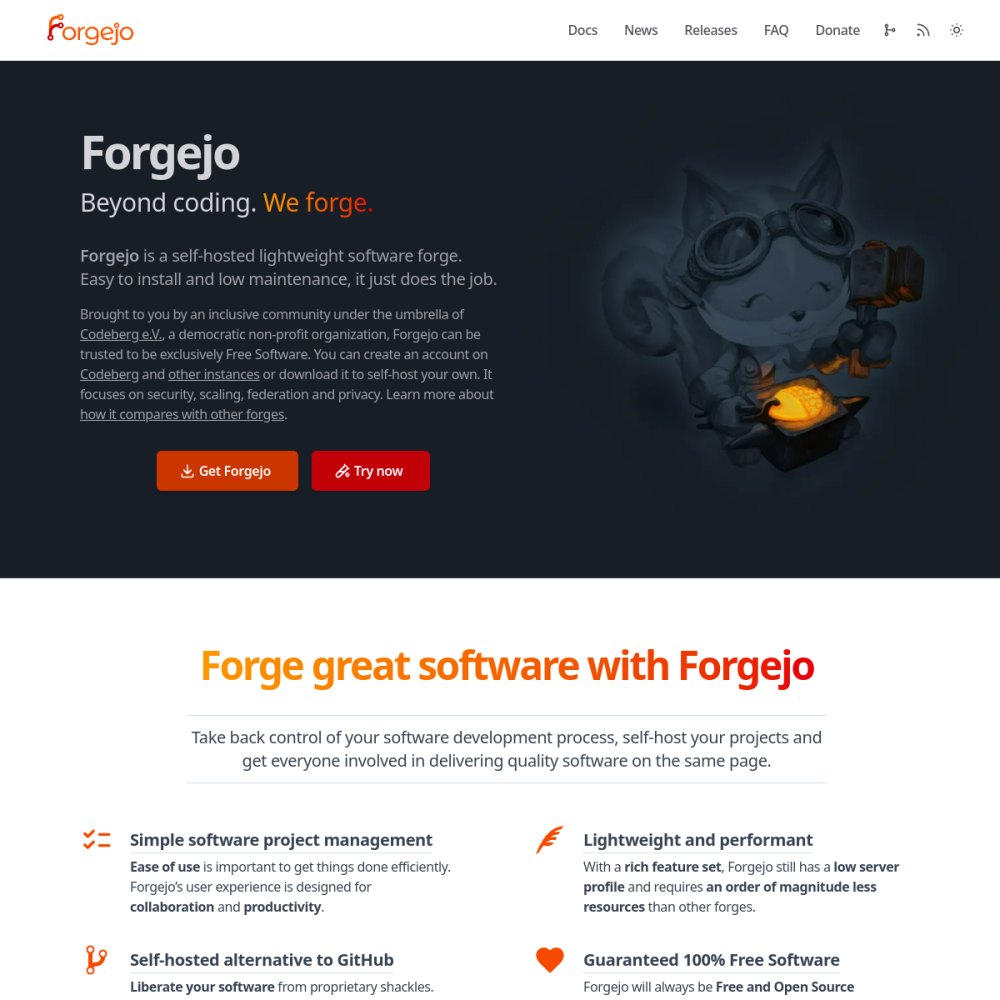
// official site: forgejo.org ↗
Forgejo is a community-driven fork of Gitea — a lightweight, self-hosted Git platform with code hosting, issue tracking, PRs, CI/CD via Forgejo Actions, container registry. Started in 2022 when Gitea pivoted toward commercial ownership; Forgejo is now Codeberg's preferred platform and the truly community-owned option.
Forgejo is a community-driven fork of Gitea — a lightweight, self-hosted Git platform with code hosting, issue tracking, PRs, CI/CD via Forgejo Actions, container registry. Started in 2022 when Gitea pivoted toward commercial ownership; Forgejo is now Codeberg's preferred platform and the truly community-owned option.
For teams who want Git hosting without trusting commercial roadmap pressure.
Concrete scenarios where teams pick Forgejo over the SaaS alternative.
code hosting for internal / private projects
GitHub Issues equivalent
code review on your infrastructure
GitHub Actions-compatible workflow runner
push Docker images privately
If your team profile matches one of these, Forgejo is a strong fit out of the box.
wanting self-hosted Git for proprietary code
moving from GitHub (often due to Microsoft concerns)
keeping code in-network
avoiding GitHub Enterprise per-seat billing
building shared infrastructure (Codeberg model)
When evaluating self-hosted options for this category, here are the dimensions on which Forgejo consistently lands above the alternatives.
The stack you'll plug Forgejo into — services, protocols, and adjacent apps in the BluixApps catalog.
codeberg.org/forgejo/forgejo:11.0 (release-tagged LTS)Operational guidance from running this in production — what to lock down, what surprises people.