HomeCatalog🤖 AI / LLMKokoro TTS
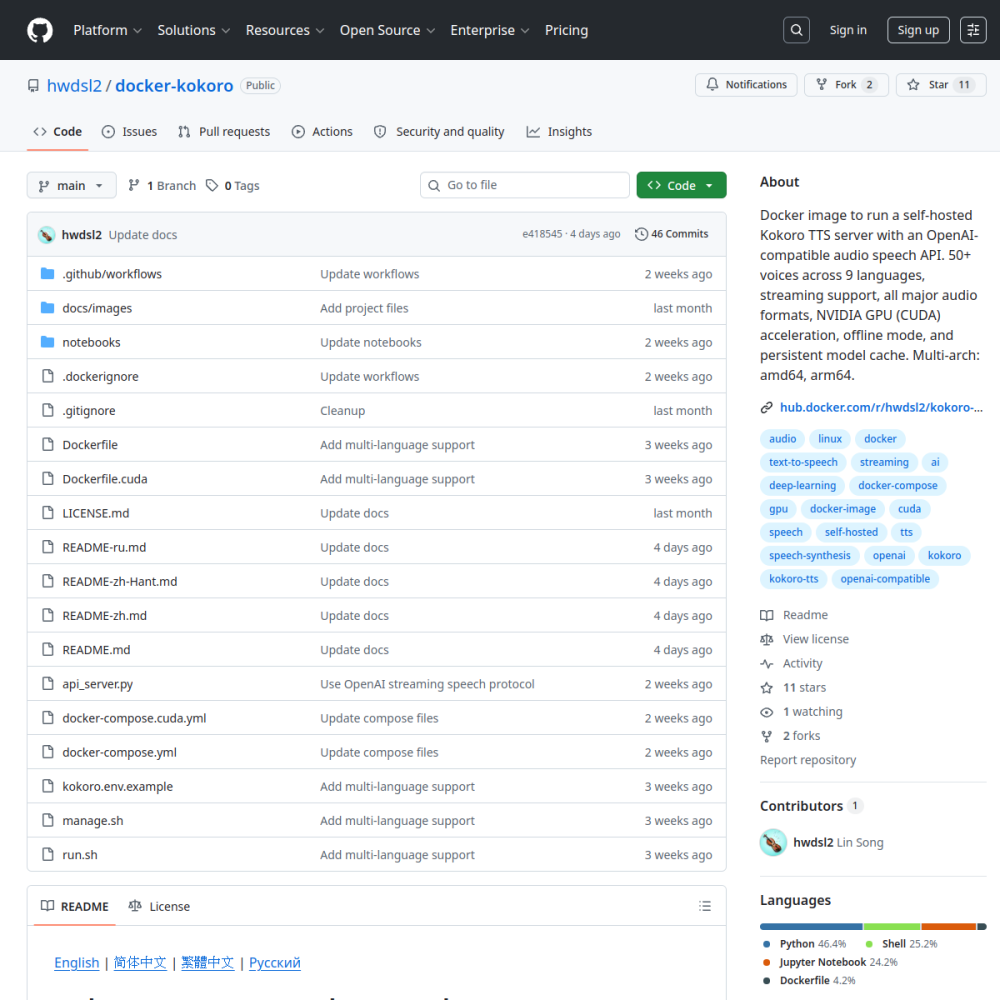
Screenshot of Kokoro TTS website

// screenshot of github.com ↗

AI / LLM · PRO TIER

Kokoro TTSpro

Kokoro is a lightweight text-to-speech (TTS) engine with high-quality voice synthesis at low compute cost. Open-source, multi-language, with the ability to clone voices from short audio samples. The Kokoro voice model is ~82M parameters — small enough to run on a $7/mo VPS, fast enough for real-time synthesis.

🤖 AI / LLM Min 2048 MB RAM Port 8880 (http) Tier pro
// What it is

A closer look.

Kokoro is a lightweight text-to-speech (TTS) engine with high-quality voice synthesis at low compute cost. Open-source, multi-language, with the ability to clone voices from short audio samples. The Kokoro voice model is ~82M parameters — small enough to run on a $7/mo VPS, fast enough for real-time synthesis.

It's the answer to "I want TTS but ElevenLabs is too expensive and I want it on my own infra".

// Use cases

What it's for.

Concrete scenarios where teams pick Kokoro TTS over the SaaS alternative.

Audio content production

convert blog posts, articles to podcast audio
Accessibility

read web content aloud for visually impaired users

Voice assistants

TTS layer for self-hosted personal AI

Audiobook generation

convert ebook libraries to audio

Notification audio

system alerts with synthesized speech

// Who it's for

Built for these teams.

If your team profile matches one of these, Kokoro TTS is a strong fit out of the box.

Profile A

Content creators

repurposing written content as audio without ElevenLabs costs

Profile B

Accessibility teams

adding read-aloud features to internal tools

Profile C

AI developers

building voice-enabled chatbots and assistants

Profile D

Podcasters

generating audio from scripts cheaply

Profile E

Indie SaaS founders

adding TTS to products without expensive API bills

// Differentiators

Why teams pick Kokoro TTS.

When evaluating self-hosted options for this category, here are the dimensions on which Kokoro TTS consistently lands above the alternatives.

  • High quality at low parameter count — competitive with much larger models
  • Multi-language — English, Spanish, French, German, more
  • Real-time capable — generates audio faster than playback on CPU
  • Apache 2.0 — commercial use unrestricted
  • Self-hosted — no per-character billing like cloud TTS
  • Streaming output — generates audio as it processes text
// Integrations

Connects to.

The stack you'll plug Kokoro TTS into — services, protocols, and adjacent apps in the BluixApps catalog.

Python API
primary interface, easy embedding in apps
HTTP REST API
Kokoro-FastAPI wrapper exposes service endpoint
Audio format outputs
WAV, MP3, OGG via ffmpeg
Voice presets
multiple speaker voices included
Custom voices
voice cloning from short samples (research/personal use)
OpenAI-compatible API
drop-in for code expecting OpenAI TTS
Streaming
chunked audio for low-latency apps
// Adoption & deployment

Notable users & community

  • 15k+ GitHub stars
  • Featured in /r/LocalLLaMA voice-AI threads
  • Active development with frequent voice quality improvements
  • Strong adoption in self-hosted voice-assistant projects
  • Open-source community contributing language additions

What we ship

  • Docker compose: Kokoro-FastAPI wrapper + voice model cache
  • Pinned ghcr.io/remsky/kokoro-fastapi:latest
  • HTTPS via Let's Encrypt; API key auth
  • Voice models pre-downloaded to avoid first-request delay
  • OpenAI-compatible endpoint at /v1/audio/speech for drop-in compatibility
  • Persistent volume for voice model cache
  • Stateless service — no backup needed beyond config
// Tips & operations

Run it properly.

Operational guidance from running this in production — what to do before you scale, what to lock down, what surprises people.

// PERFORMANCE
CPU is fine for batch
real-time on CPU works for short text; longer needs GPU for low latency
// SECURITY
Voice cloning ethics
only clone voices you have permission to use; legal liability risk
// OPERATIONS
Cache common phrases
repeated TTS calls for the same text waste compute; cache the audio
// RELIABILITY
Set output format early
re-encoding WAV→MP3 adds latency; ask for MP3 directly when possible
// DEPLOYMENT
GPU memory
model is small; even 4GB GPU handles it; CPU runs 5-10× slower
// SCALING
Voice selection
different voices for different content types (news, fiction, technical)
2048
// min ram (MB)
5
// min disk (GB)
8880
// access port
http
// protocol
pro
// bluixapps tier
8880:8880
// docker image

Project resources

Official sitegithub.com ↗
// Alternatives in AI / LLM

Compare with